


Independent testing and bedding certification help manufacturers demonstrate product performance for consumers seeking healthier sleep environments.
How independent testing helps manufacturers demonstrate performance in products designed for the sleep environment
Sleep Awareness Week highlights the growing awareness that sleep quality is closely connected to the indoor environment. For manufacturers in the bedding and home textiles sector, this trend reflects increasing consumer interest in products that support healthier sleep environments.
Most adults require 7–9 hours of sleep per night, and growing research continues to link poor sleep with negative health outcomes including cardiovascular disease, metabolic disorders and reduced cognitive performance. As awareness of these links increases, consumers are paying closer attention to the products used in their bedrooms.
Bedding products play a particularly important role in the sleep environment.
Allergens in the Sleep Environment
During sleep, people remain in close contact with bedding for extended periods of time. Over time, bedding can accumulate dust mite allergen, pet dander and pollen, all of which may contribute to allergic symptoms (including allergic asthma) that disrupt sleep.
Dust mite allergen is widely recognised as one of the most common triggers of indoor allergies. Managing exposure to these allergens is therefore an important consideration in the design and manufacture of bedding products.
Consumers are also increasingly aware of other product attributes that influence comfort and sleep quality, including fabric breathability, durability and chemical sensitivities.
The Challenge of Unverified Claims
Terms such as “hypoallergenic” are widely used in the bedding market. However, the term has no formal regulatory definition in the United States, which means it can be used without scientific substantiation.
This lack of standardisation can create confusion in the marketplace and make it more difficult for manufacturers to clearly demonstrate product differentiation.
Independent certification can help address this challenge.
The Power of Certification
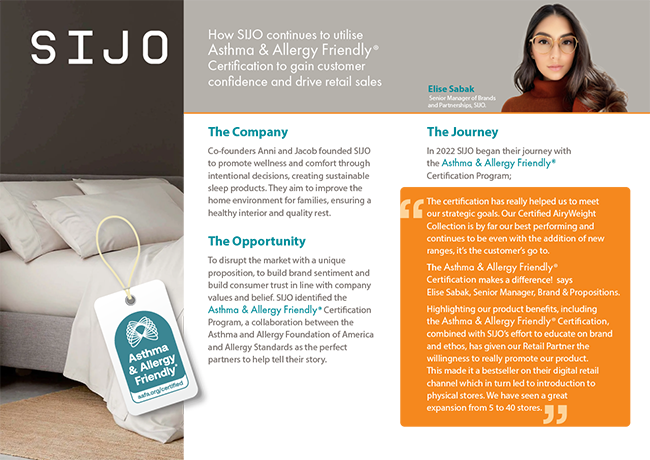
For manufacturers seeking to differentiate in an increasingly competitive bedding market, independent certification can play a significant role in building both consumer and retailer confidence. Bedding brand SIJO, which joined the Asthma & Allergy Friendly® Certification Program in 2022, has seen clear commercial benefits from highlighting certified product performance.
According to Elise Sabak, Senior Manager of Brands and Partnerships at SIJO, their Certified AiryWeight collection has become the company’s best-performing line. Certification has helped communicate product benefits more clearly to consumers while strengthening retailer confidence in the brand’s value proposition.
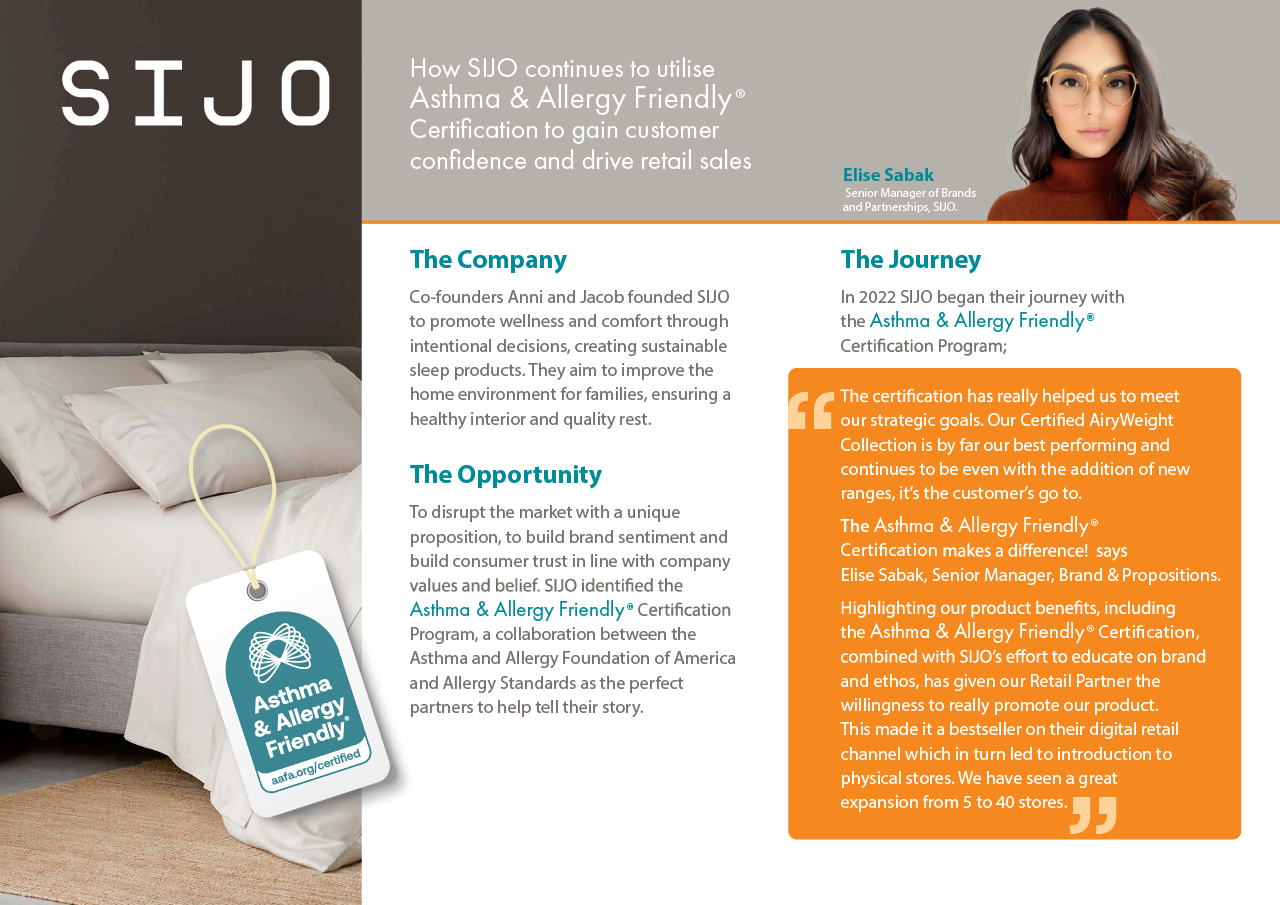

As SIJO’s digital success gained traction, this credibility helped support expansion into physical retail, with distribution growing from five stores to forty. The experience demonstrates how independent certification can help manufacturers validate product claims, differentiate in a crowded marketplace and support retail growth.
The Value of Third-Party Certification
The Asthma & Allergy Friendly® Certification Program, developed by Allergy Standards Ltd in collaboration with the Asthma and Allergy Foundation of America (AAFA), provides manufacturers with a pathway for independent evaluation of product performance.
For bedding products, certification testing assesses several criteria including:
Allergen barrier performance of outer fabrics
Fabric breathability and comfort characteristics
Ability to remove allergen accumulation through washing
Product durability under repeated cleaning conditions
Assessment of potentially irritating chemicals
Through independent laboratory testing, certification helps manufacturers demonstrate that product claims have been evaluated against defined performance standards.
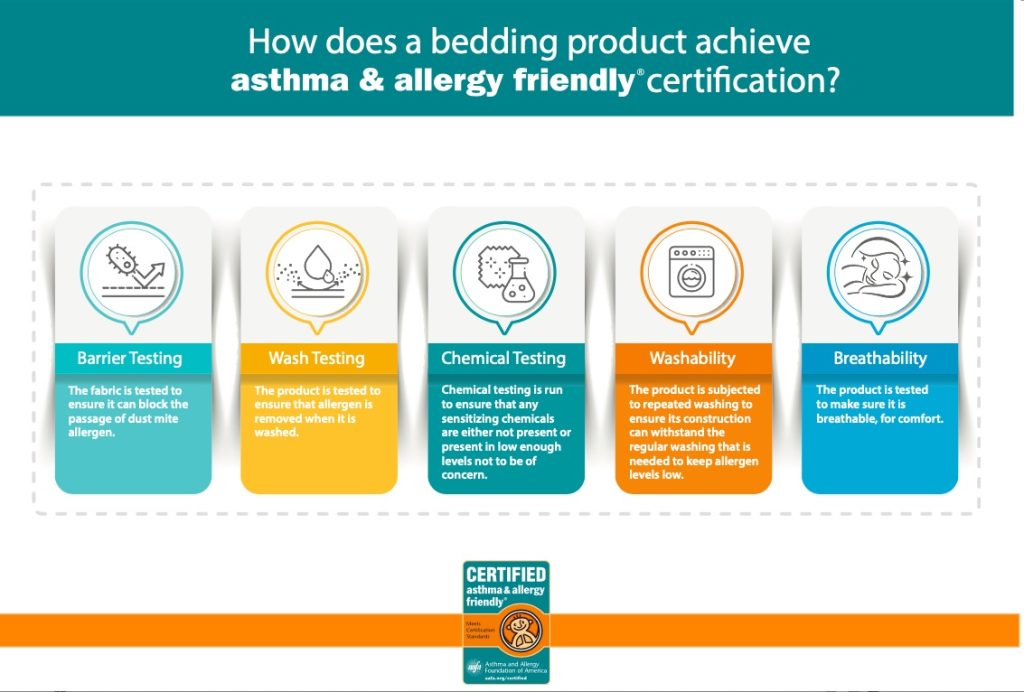
Bedding products certified Asthma & Allergy Friendly® undergo independent testing including allergen barrier testing, allergen removal, chemical testing, washability and breathability.
A Growing Market Opportunity
As awareness of indoor environmental health continues to grow, manufacturers that invest in credible product validationare well positioned to stand out in a competitive marketplace.
Independent certification provides:
Scientific validation of product claims
Product differentiation at retail
Increased credibility with consumers and healthcare professionals
Sleep Awareness Week provides an opportunity to highlight how bedding products can influence the sleep environment. For manufacturers, independent certification offers a way to demonstrate leadership in developing products designed with indoor environmental health in mind.

Medical & Lifestyle Author Dr Anna O’Donovan
About Dr. Anna O’Donovan – Medical & Lifestyle Author
Anna is a mum of three children, one with allergies, and she suffers from allergies and asthma herself. She is a qualified doctor and worked as a General Practitioner and as a dentist for a number of years. She is also an award-winning author.
Key Words
certification, textiles, mattresses, sleep, air quality, indoor air quality, asthma, healthy, allergies, dust mite, allergens, air purifiers, healthy home, hypoallergenic, sleep awareness week, Asthma & Allergy Friendly®
Related Internal Links