

A Key Opportunity for Bedding Manufacturers
As consumer awareness of the importance of healthier indoor environments continues to rise, bedding manufacturers have an opportunity to address this growing demand by offering products that are not only comfortable but also scientifically proven to support better indoor air quality (IAQ). With October being Indoor Air Quality Month, there is no better time to highlight the role of bedding in creating a healthier home environment.
Why Healthier Indoor Environments Matter to Consumers
Today’s consumers are more health-conscious than ever, and many are seeking ways to improve the air quality in their homes. Poor IAQ is a significant contributor to health issues, particularly for those with asthma and allergies. Bedding, a primary source of dust mite allergen, can play a critical role in exacerbating these conditions. Dust mites thrive in mattresses, pillows, and duvets, with their body parts and waste serving as common asthma and allergy triggers. Additionally, certain chemicals used in bedding production, such as formaldehyde and dyes, can release volatile organic compounds (VOCs), further contributing to poor IAQ and triggering respiratory issues.
For bedding manufacturers, understanding this consumer concern presents a unique market opportunity. The demand for products that support healthier indoor environments has become a decisive factor in purchasing decisions, especially as consumers become increasingly wary of unverified claims such as “hypoallergenic,” a term that remains unregulated and is often used as a marketing ploy.
In response, Allergy Standards Ltd. (ASL), in collaboration with the Asthma and Allergy Foundation of America, created the Asthma & Allergy Friendly® Certification Program, offering bedding manufacturers a pathway to differentiate their products by earning certification. This certification helps manufacturers position themselves as leaders in the market, providing consumers with trusted, independently validated products.
The Certification Process: What It Means to Be Certified Asthma & Allergy Friendly®
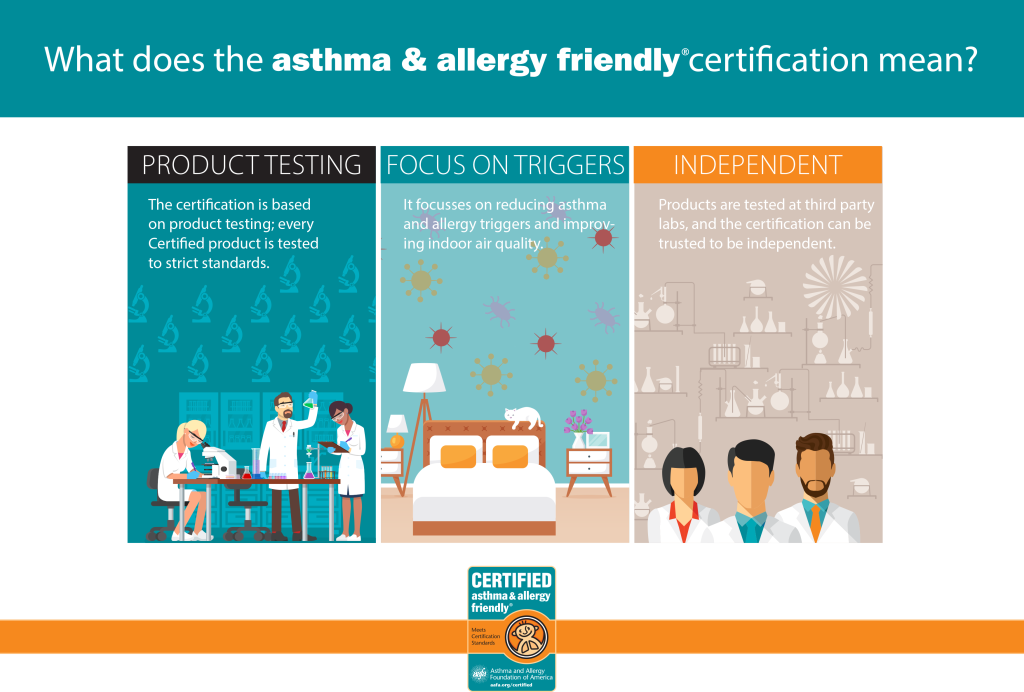
Earning the Asthma & Allergy Friendly® Certification demonstrates that a bedding product has undergone rigorous testing based on scientific standards developed by ASL. Certification testing ensures that products effectively support the reduction of allergen exposure and release minimal harmful chemicals like VOCs, making them a trusted choice for consumers with asthma and allergies. The Certification Program tests bedding for its ability to act as a barrier to allergens such as dust mite allergen, pet dander, and pollen, while also evaluating the product’s durability and efficacy after repeated washing.
This independent validation from a third party like ASL reassures consumers that a manufacturer’s bedding products have been objectively proven to meet strict standards, helping them make informed decisions in a market saturated with unverified claims.

Key Benefits to Manufacturers: Gaining Market Advantage and Consumer Confidence
By achieving the Asthma & Allergy Friendly® Certification, bedding manufacturers gain a significant market advantage. The certification not only differentiates their products from competitors but also builds consumer confidence, which in turn drives retail sales. With over 60% of people with asthma and allergies finding it difficult to choose appropriate products for their homes, the Certification Mark acts as a reliable guide, offering clarity in an otherwise confusing marketplace. Consumers increasingly rely on independent certifications to ensure that the products they bring into their homes will not negatively impact their health.
The certification also positions manufacturers as leaders in environmental, social, and governance (ESG) initiatives. Offering Certified Asthma & Allergy Friendly® products aligns with the growing consumer expectation for companies to prioritize sustainability and social responsibility. Manufacturers who achieve certification demonstrate a commitment to improving public health while meeting consumer demand for products that support a healthier indoor environment.
Beyond Certification: Ongoing Support and Education
Bedding manufacturers who partner with the Asthma & Allergy Friendly® Certification Program gain more than just a certification. They receive ongoing support, education, and access to consumer research from the Certification Program. This support helps manufacturers not only refine their product offerings but also effectively communicate the benefits of their Certified products. The Certification Program provides marketing and promotional assistance, enabling manufacturers to better reach and educate their target market about the importance of healthier indoor environments.
In addition, the Certification Program regularly conducts and shares research on asthma and allergies, ensuring that manufacturers stay at the forefront of industry developments. By participating in this knowledge-sharing network, manufacturers can educate their consumers on the latest health trends and the impact that indoor air quality has on overall well-being.
Conclusion: Seize the Opportunity for Market Leadership
With more than 100 million Americans affected by asthma and/or allergies, there is a clear and growing demand for bedding that supports healthier indoor environments. By achieving the Asthma & Allergy Friendly® Certification, bedding manufacturers can provide consumers with trusted, scientifically validated products, gaining a competitive edge in the marketplace. The certification not only drives retail sales and builds consumer trust but also supports broader ESG goals, ensuring that manufacturers play a pivotal role in improving public health and indoor air quality.
For bedding manufacturers looking to stand out in a crowded market, the Asthma & Allergy Friendly® Certification is an invaluable tool that offers a clear pathway to both product excellence and consumer confidence.
Key Words
bedding, textiles, chemicals, dust mite allergen, environment, air quality, asthma, health, allergies, allergens, healthy home, third party certification, standards, indoor environment,