

The Asthma and Allergy Foundation of America (AAFA) has released its 2026 Allergy Capitals report, an annual analysis that ranks the 100 most populated metropolitan areas in the contiguous United States based on how challenging they are for people living with pollen allergies.
The report evaluates cities using three primary data points:
- Tree, grass, and weed pollen scores
- Over-the-counter allergy medicine use
- Availability of board-certified allergists and immunologists
By combining these factors, AAFA provides a comparative overview of the locations where seasonal allergies may present the greatest challenges for residents.
2026 Allergy Capitals Rankings
For the first time, Boise, Idaho ranks as the most challenging place to live with pollen allergy.
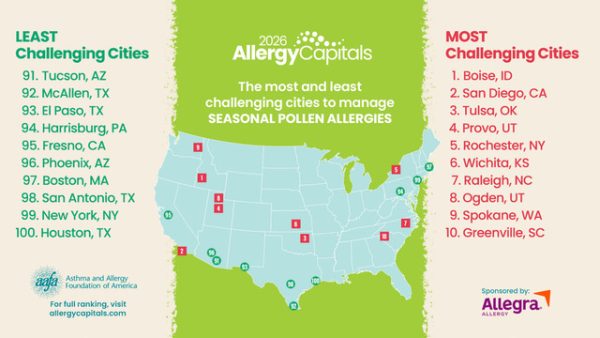
AAFA’s 2026 Allergy Capitals report identifies the most and least challenging U.S. cities for managing seasonal pollen allergies.
Environmental Drivers of Longer Allergy Seasons
AAFA notes in the report that climate change is contributing to longer and more intense pollen seasons.
Warmer temperatures can cause plants to start growing earlier and extend pollen production later into the year. In addition, higher levels of carbon dioxide in the atmosphere can increase pollen production by plants and may increase the allergenicity of pollen.
The report also points to extreme weather events (including atmospheric rivers, drought conditions, and unusually warm seasons) as factors that may influence pollen production and pollen exposure in certain regions.
In recent years, these environmental conditions have contributed to notable increases in pollen levels in parts of the Western United States.
The Health Impact of Pollen Allergies
Pollen is one of the most common triggers of seasonal allergic rhinitis, commonly referred to as hay fever. The primary pollen types responsible for seasonal allergies are tree, grass, and weed pollen.
Pollen exposure can affect the respiratory system and may worsen allergic conditions such as asthma. Research has also linked increased pollen exposure with impacts on sleep, fatigue, mood, and daily functioning.
With more than 106 million Americans living with allergies and/or asthma, seasonal pollen exposure remains a significant public health concern.
Supporting Allergy Management Through Awareness and Prevention
AAFA’s Allergy Capitals report is designed to help people better understand the environmental factors affecting seasonal allergies and to support improved management strategies.
Some key steps recommended by AAFA include:
- Monitoring pollen forecasts and counts
- Reducing pollen exposure indoors
- Starting allergy medicines before pollen season begins
- Working with healthcare professionals to develop a treatment plan
The Role of Indoor Environments
Although pollen originates outdoors, indoor environments can influence overall allergen exposure.
Through the Asthma & Allergy Friendly® Certification Program, developed with AAFA, we scientifically evaluate household products against strict standards designed to help reduce exposure to allergens and asthma triggers in the home.
As seasonal allergies continue to affect millions of people across the United States, initiatives that support improved awareness, allergen reduction, and evidence-based product evaluation can help individuals better manage their environments.
Download the full report on AAFA’s website

Medical & Lifestyle Author Dr Anna O’Donovan
About Dr. Anna O’Donovan – Medical & Lifestyle Author
Anna is a mum of three children, one with allergies, and she suffers from allergies and asthma herself. She is a qualified doctor and worked as a General Practitioner and as a dentist for a number of years. She is also an award-winning author.
Key Words
certification, indoor air quality, asthma, healthy, allergies, allergens, healthy home, Asthma & Allergy Friendly®, AAFA allergy capitals, pollen trends, seasonal allergies, pollen seasons, climate change and allergies, environmental health, allergy research
Related Internal Links