

Asthma Capitals™ Report: Environmental and Social Drivers of Asthma
The Asthma and Allergy Foundation of America (AAFA) has released its 2025 Asthma Capitals™ report, once again shedding light on the burden of asthma across U.S. cities. This comprehensive analysis ranks the 100 largest metropolitan areas based on asthma prevalence, emergency department visits, and asthma-related deaths.
This year’s top three cities are Detroit, MI, Rochester, NY, and Allentown, PA, reflecting the ongoing challenges of managing asthma in communities where social, economic, and environmental factors converge.
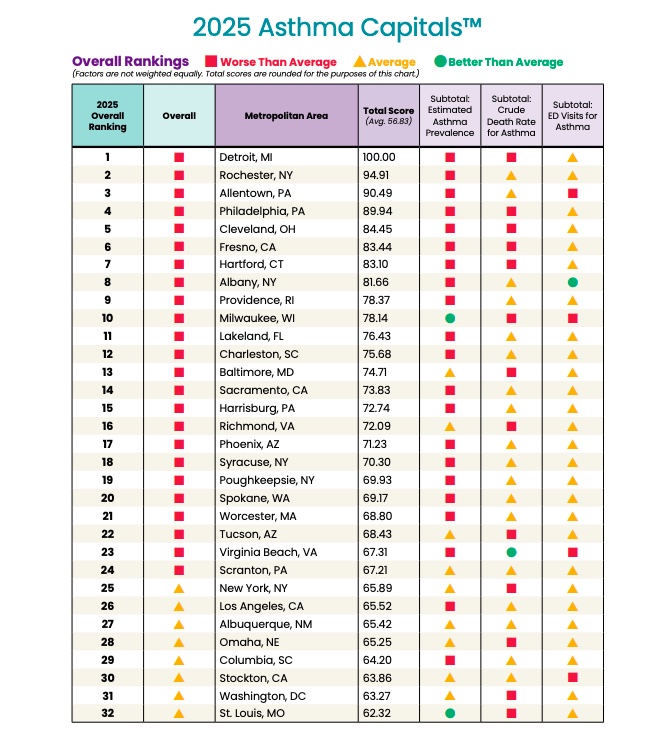
Environmental and Social Drivers of Asthma
The 2025 report emphasizes how risk factors such as poverty, access to healthcare, limited availability of specialists, and exposure to both outdoor and indoor air pollutants can make asthma harder to control. While outdoor conditions like air pollution and pollen are well-recognized, indoor air quality (IAQ) remains an equally critical but often overlooked driver.
We spend approximately 90% of our time indoors, yet buildings can concentrate asthma triggers such as:
Dust mite allergen
Pet dander
Mold spores
Pollen brought indoors
Volatile Organic Compounds (VOCs) from building materials and cleaning products
These exposures can intensify asthma symptoms and contribute to the disparities that AAFA’s report documents.
Turning Research Into Action
At Allergy Standards Ltd, we are proud to partner with AAFA on the Asthma & Allergy Friendly® Certification Program, which helps identify and test consumer products that can make a measurable difference in indoor environments. By certifying products such as air cleaners, bedding, flooring, and cleaning products, we ensure they meet rigorous scientific standards for reducing allergens and irritants.
AAFA’s research provides the context for why such interventions are urgently needed. The report highlights not only the scale of the asthma burden but also the inequities that persist across communities. These findings underscore the importance of evidence-based strategies to improve both public health outcomes and the environments where people live, learn, and work.
A Shared Commitment
The Asthma Capitals™ report is an invaluable tool for policymakers, healthcare providers, and advocates. By highlighting the cities most affected and the drivers behind these disparities, AAFA provides a foundation for meaningful action.
Read the full 2025 Asthma Capitals™ report on AAFA’s website.
Key Words
AAFA, 2025 Asthma Capitals Report, Allergy Standards Ltd, Asthma & Allergy Friendly® Certification, indoor air quality, certified products
Related Internal Links
Press Release: Kleenex® Demonstrates Philanthropic Leadership with Donation of Certified Air Filters