

What Today’s Bedding Shoppers Really Want, And How Retailers Can Respond
Introduction: What You’ll Learn
At Spring Market Week, retailers are making key decisions about which bedding lines to carry for the year ahead. Comfort and aesthetics will always be important, but today’s consumers are asking deeper questions: How was this product tested? What chemicals does it contain? Will this bedding help create a cleaner, healthier sleep environment for my family?
In this article, you’ll learn:
- Why the bedroom is a high-risk zone for poor indoor air quality (IAQ).
- How allergies, asthma, and poor air quality affect sleep and wellness.
- Why marketing terms like “hypoallergenic” fall short, and what to specify instead.
- Which certified products make the biggest difference in health-focused bedroom design.
- How retailers can differentiate their bedding lines with third-party science-based certification.
The days of relying on vague terms like hypoallergenic, green, or eco-friendly are over. Shoppers are demanding clear, science-based assurances before they bring bedding into their homes. For retailers, the opportunity is clear: understand what consumers are looking for and stock products that can provide trustworthy answers.
Here are ten things consumers want to know about bedding, and why retailers should pay attention.
1. Is this bedding scientifically tested, not just marketed?
The term hypoallergenic is widely used in bedding, but it’s not regulated. Any company can put it on a label, without proof. Consumers are becoming more aware of this gap. They want products that are backed by independent, scientific testing, not just marketing claims.
2. Will this bedding help reduce exposure to allergens?
Dust mites thrive in mattresses, pillows, and duvets. Their waste particles are among the most common triggers for asthma and allergies. Shoppers want reassurance that bedding has been tested to effectively block allergens and remain effective after repeated use and washing.
3. Does it release harmful chemicals?
Bedding can be a source of volatile organic compounds (VOCs), released from dyes, adhesives, or finishes. These chemicals can contribute to poor indoor air quality and act as triggers for people with respiratory issues. Consumers increasingly ask whether their bedding has been tested for chemical emissions, not just softness or durability.
4. What about durability after washing?
Consumers expect bedding to perform after dozens of washes. If allergen barriers break down or chemicals leach out over time, the product no longer supports a healthier home. Third-party testing ensures durability is validated, not assumed.
5. Can I trust the claims on the label?
In a marketplace full of “greenwashed” products, trust is currency. According to consumer research conducted by the Asthma & Allergy Friendly® Certification Program, more than 60% of people with asthma and allergies report difficulty choosing the right products for their homes. Retailers can play a key role by pointing to independent certifications that confirm products are truly designed for sensitive consumers.
6. Is this product aligned with broader health and wellness goals?
Consumers are not only shopping for comfort, they’re shopping for wellness. Sleep quality, respiratory health, and overall well-being are part of the conversation. Bedding that contributes to cleaner air and fewer nighttime triggers connects directly to these priorities.
7. Is this brand credible on sustainability and ESG?
Retailers are under pressure to meet environmental, social, and governance (ESG) expectations. Consumers want products that are both people- and planet-friendly. Carrying Certified bedding demonstrates responsibility not just toward the environment, but also toward public health.
8. Is this product validated by a recognized third party?
Certifications such as the Asthma & Allergy friendly® Certification Program, developed by Allergy Standards Ltd in partnership with the Asthma and Allergy Foundation of America, provide that validation. Bedding products that earn this mark undergo rigorous testing for allergen barrier performance, chemical emissions, and usability. For consumers, the Certification Mark is an instant signal of trust.
9. What do other health-conscious shoppers choose?
Consumers often look to their peers for cues. Over 200 products, from paints to flooring to bedding, already carry the Asthma & Allergy Friendly® mark in the U.S. Retailers who stock these products are positioning themselves in line with a proven consumer trend.
10. How does this purchase support my family’s health?
At the end of the day, bedding is personal. Families want to know that their mattress, pillows, and linens won’t worsen allergies or asthma, and that they’ve made a healthier choice for their children and loved ones. Retailers who understand and communicate this benefit will stand apart.
Why This Matters for Retailers at Market Week
The bedding category is crowded, so differentiation has to be a priority. Stocking products that carry independent, science-based certifications provides a clear competitive edge. It also helps retailers avoid the reputational and regulatory risks of unverified health claims.
When consumers walk into a showroom or browse online, they are searching for clarity. Offering bedding with trusted certification not only builds consumer confidence but also strengthens the retailer’s reputation for responsibility and leadership.
Certified Bedding as a Pathway to Retail Growth
By supporting bedding lines certified through the Asthma & Allergy Friendly® Certification Program, retailers can:
- Gain consumer trust in a confusing marketplace.
- Increase conversions and sales by aligning with health-conscious shoppers.
- Meet ESG and wellness goals with products that support both sustainability and public health.
- Protect against legal risk by avoiding unregulated and misleading health claims.
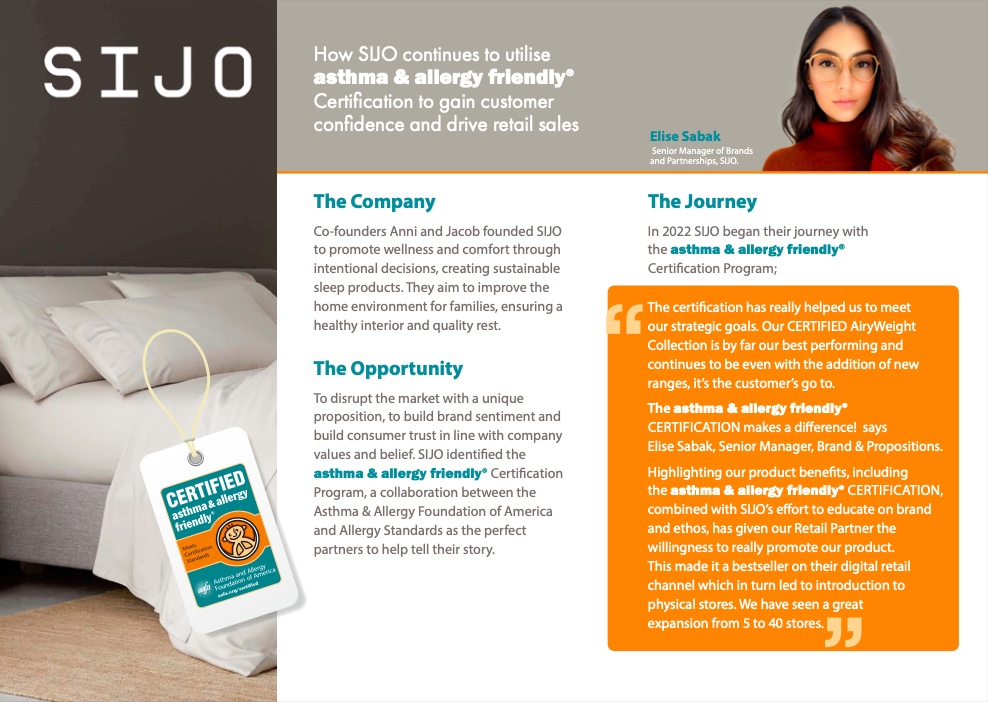
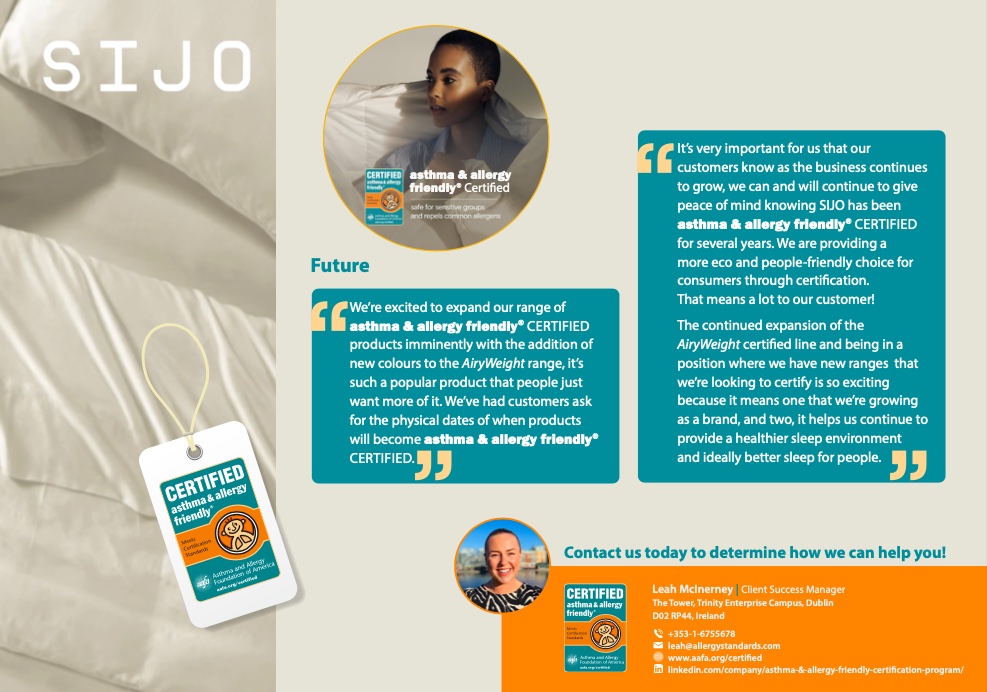
A prime example is SIJO, a Certified bedding brand whose AiryWeight Collection became its best-performing product line after earning Asthma & Allergy Friendly® Certification. Retail partners were confident in promoting the collection because the benefits were independently validated, leading to rapid retail expansion, from just 5 stores to 40 in a short time.
Beyond the Asthma & Allergy Friendly® certification itself, manufacturers and retailers benefit from ongoing education, marketing support, and consumer research from the Certification Program, ensuring the conversation around healthier indoor environments continues to grow.
Conclusion: Certified Bedding for Healthier Homes
Yes, consumers today want softness, style, and thread count. But they also want assurance and scientific proof that the bedding they bring home won’t make asthma, allergies, or air quality worse.
For retailers, Market Week is the time to recognize this change. Stocking bedding with credible third-party certifications offers an opportunity to deliver what consumers are really asking for: trusted products that support health and wellness, validated by science.
Key Words
Fall Market Week, bedding, textiles, allergens, VOCs, case study, Allergy Standards Ltd, Asthma & Allergy Friendly® Certification, indoor air quality, AAFA, certified products, market expansion, SIJO
Related Internal Links